
Pennsylvania Right-to-Know Law
General government records in Pennsylvania open under the Right-to-Know Law, found at 65 P.S. Sections 67.101-67.3104. The law treats records of Commonwealth and local agencies as public unless an exemption applies. It sets a response deadline, lists what stays closed, and builds an appeal path through the state Office of Open Records. Allegheny County is a local agency under this law, so many county records can be requested this way.
But the Right-to-Know Law does not control court case files. That is the key point most people miss. The county's own court-records open-records page tells requesters not to use the Open Records form for a Court of Common Pleas case file. Court files are public unless a judge sealed them, and they come from the court-records office, not through an agency open-records form. So a deed, a budget, or a county contract may run through the Right-to-Know Law, while a lawsuit file or a criminal docket runs through a separate court channel.
Anyone can file a Right-to-Know request. You do not need to be a Pennsylvania resident, and you do not need to give a reason. The agency must respond in writing within the statutory window.
What Records Allegheny County Maintains
The county holds far more than court files. The Department of Court Records, or DCR, keeps civil, criminal, family, and Orphans' Court case records, plus marriage license records, through its three divisions. Other county offices and agencies hold a wide range of general public records that fall under the Right-to-Know Law. The split matters because the request path changes with the record type.
For context on the county itself, the U.S. Census Bureau keeps a public data profile for Allegheny County.
You can view the Census QuickFacts page for Allegheny County for population, housing, and demographic figures.
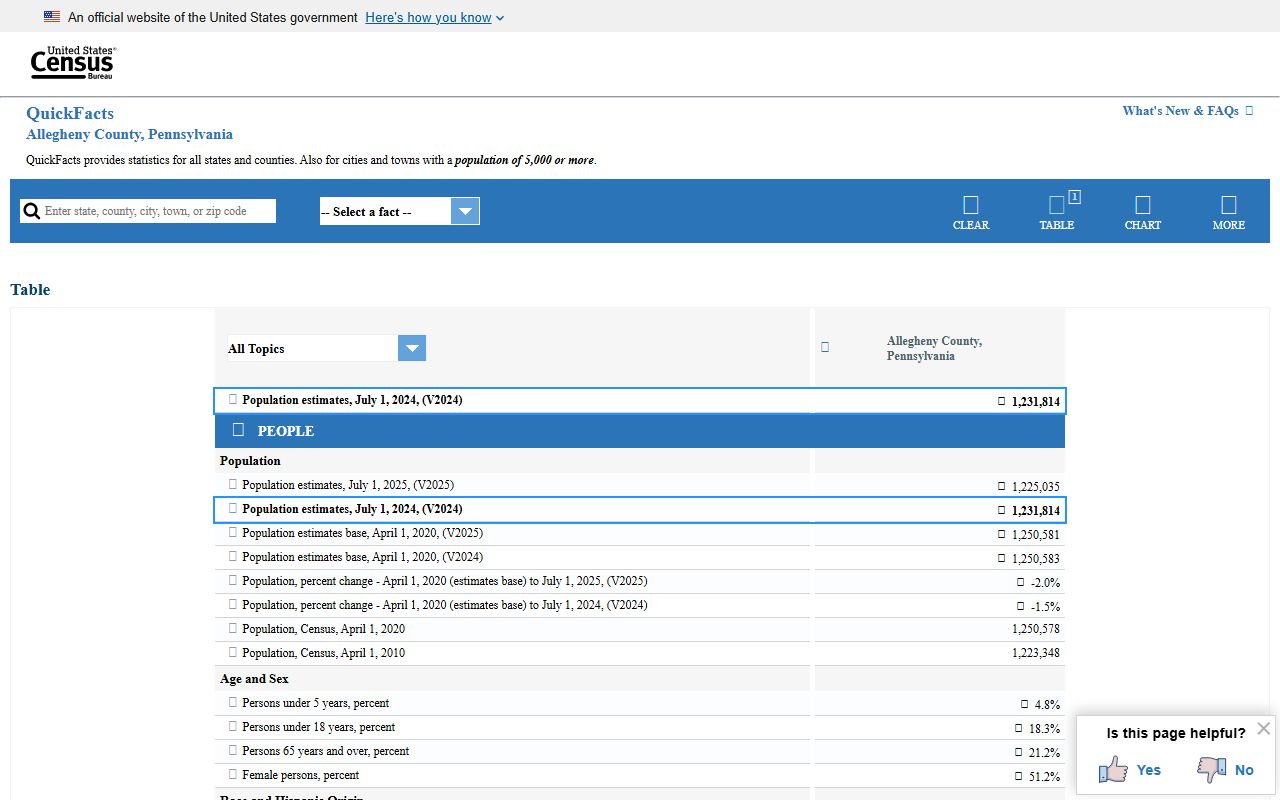
That QuickFacts profile is a free, official source for the kind of background data people often pair with a public records search. The records most people request from the county fall into these groups.
- Civil and family court case files held by DCR Civil/Family Division.
- Adult criminal case files held by DCR Criminal Division.
- Estate, will, guardianship, and marriage records held by the Wills/Orphans' Court Division.
- Property and deed records recorded with the county.
- General agency records such as budgets, contracts, and meeting minutes under the Right-to-Know Law.
Public Court Case Files
Court case files are public records in their own right. The county court-records open-records page says case files for the Court of Common Pleas are open to the public unless sealed by court order. To get one, you contact the right DCR division rather than filing an Open Records form. The page lists direct numbers for each record type, which keeps requests from bouncing between offices.
Online, the free statewide tool for docket information is the Pennsylvania UJS case search. It shows docket sheets for the Court of Common Pleas, the magisterial district courts, and Pittsburgh Municipal Court. The docket is the public index of a case. The full case file, with complaints, motions, and orders, comes from DCR. For a deeper walk through portals and fields, see Allegheny County court records.
Note: A court case file is requested from the Department of Court Records, not through the county Right-to-Know form, even though both kinds of records are public.
How to File a Public Records Request in Allegheny County
The first job is to pick the right path. A general agency record goes through a Right-to-Know request to the county's open-records officer. A court case file goes to DCR by phone, mail, or in person. Picking wrong is the most common reason a request stalls. The steps below cover the general open-records path for agency records.
- Decide if the record is a court case file or a general agency record. Court files go to DCR; agency records use the Right-to-Know Law.
- For an agency record, address your request to the county open-records officer and describe the records as clearly as you can.
- Submit the request in writing by mail, email, or the agency's intake channel under the Right-to-Know Law.
- Wait for the written response within the statutory deadline; the agency may grant, deny, or ask for more time.
- Pay any copy or fulfillment fees, then receive the records in the format the office can provide.
For a court case file, the path is shorter. Call or visit the matching DCR division with the docket number and a photo ID, then pay the copy fee. The court-records page makes this clear.
You can read the request guidance on the Allegheny County court records open-records page. It lists Civil/Family Court Records at 412-350-4200, Criminal Court Records at 412-350-5322, and Wills/Orphans-Court Records at 412-350-4180.
Public Records Request Form Fields
A clear request gets a faster answer. A vague one gets sent back for clarification. Whether you write a Right-to-Know request or contact DCR for a court file, the same core details help staff find what you need. The table lists the fields a request should include.
| Field | Required | Notes |
|---|---|---|
| Requester Name | Yes | Your name and a way to reach you for the written response. |
| Description of Records | Yes | Name the record, office, and subject; for a court file, give the docket number. |
| Date Range | No | Narrows a broad request and speeds the search. |
| Office or Division | No | Civil/Family, Criminal, or Wills/Orphans for a court file; the agency name for an open-records request. |
| Format Preference | No | Paper copy, certified copy, or electronic where the office can provide it. |
Confidential Information in Court Filings
Not every detail in a public file is open. Pennsylvania's Case Records Public Access Policy at 204 Pa. Code Section 213.81 defines confidential information that must be shielded even in an otherwise public case. Filers must place sensitive data on confidential forms so it does not appear on the public record.
Shielded items include Social Security numbers, financial account numbers, driver's license numbers, and a minor's name and date of birth. Abuse-victim addresses and contact information stay confidential too. In criminal cases, details that could identify jurors, victims, or non-expert witnesses are not remotely accessible. So a public docket can be open while still hiding these identifiers.
Whole categories of records sit outside ordinary public access. Juvenile court files are restricted under 42 Pa.C.S. Section 6307 to listed people and agencies. Adoption records run through Orphans' Court under special confidentiality rules. Mental health commitment records are sensitive. Sealed records and grand jury materials are closed by rule or court order.
Criminal History vs Public Dockets
A court docket and a criminal history check are not the same product. A public UJS docket shows one case at a time. A full criminal history background check is a separate, regulated record. The difference matters for anyone screening for a job, a lease, or a license.
Criminal history dissemination is governed by the Criminal History Record Information Act, or CHRIA, at 18 Pa.C.S. Chapter 91. CHRIA controls how criminal history is shared, sealed, or expunged through the Pennsylvania State Police central repository. It also limits how employers may use criminal records. A single docket pulled off UJS is not a CHRIA-compliant background check.
The state also keeps a separate public registry for certain offenders. The Pennsylvania State Police run the Megan's Law site under sex-offender registration law.
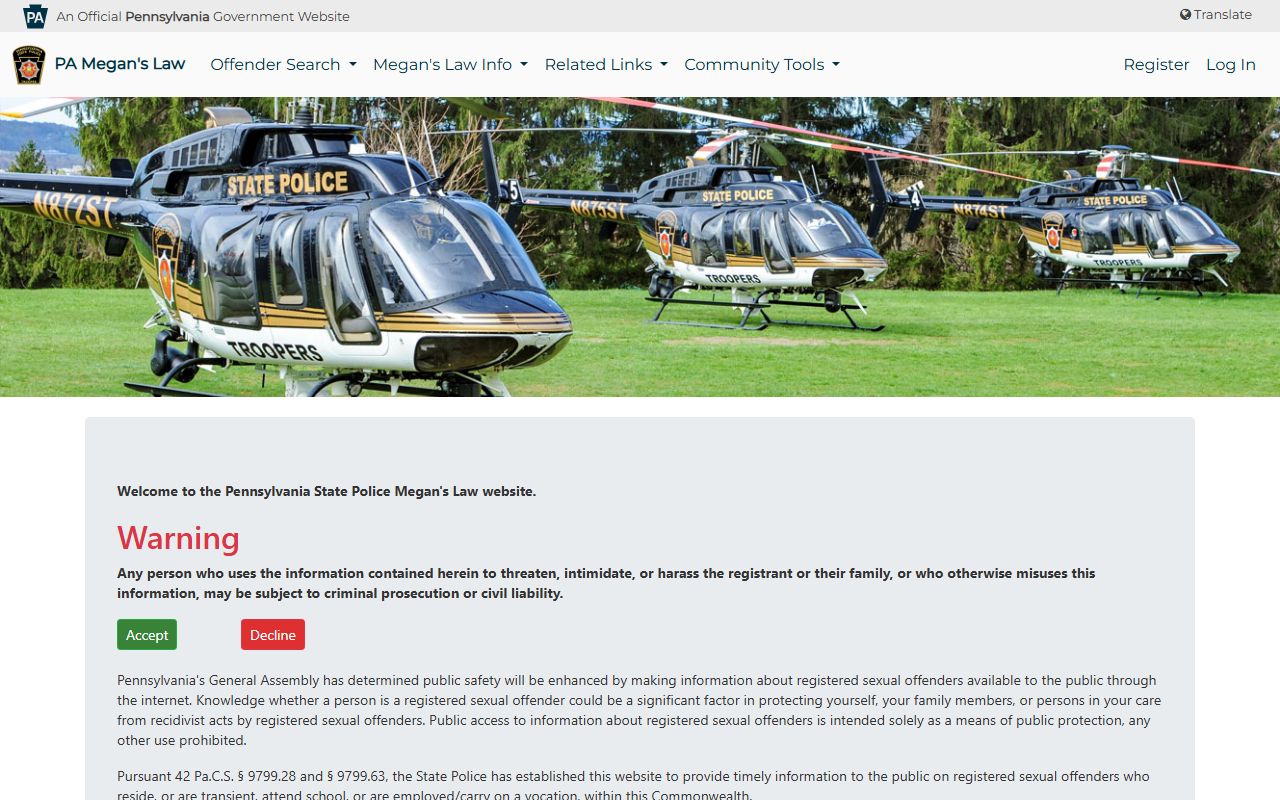
The Megan's Law terms page spells out the rules for using the registry. The site warns that the data may be outdated and is not a comprehensive list, and that the registry is for public protection, not harassment. You can search the live registry from the same site.
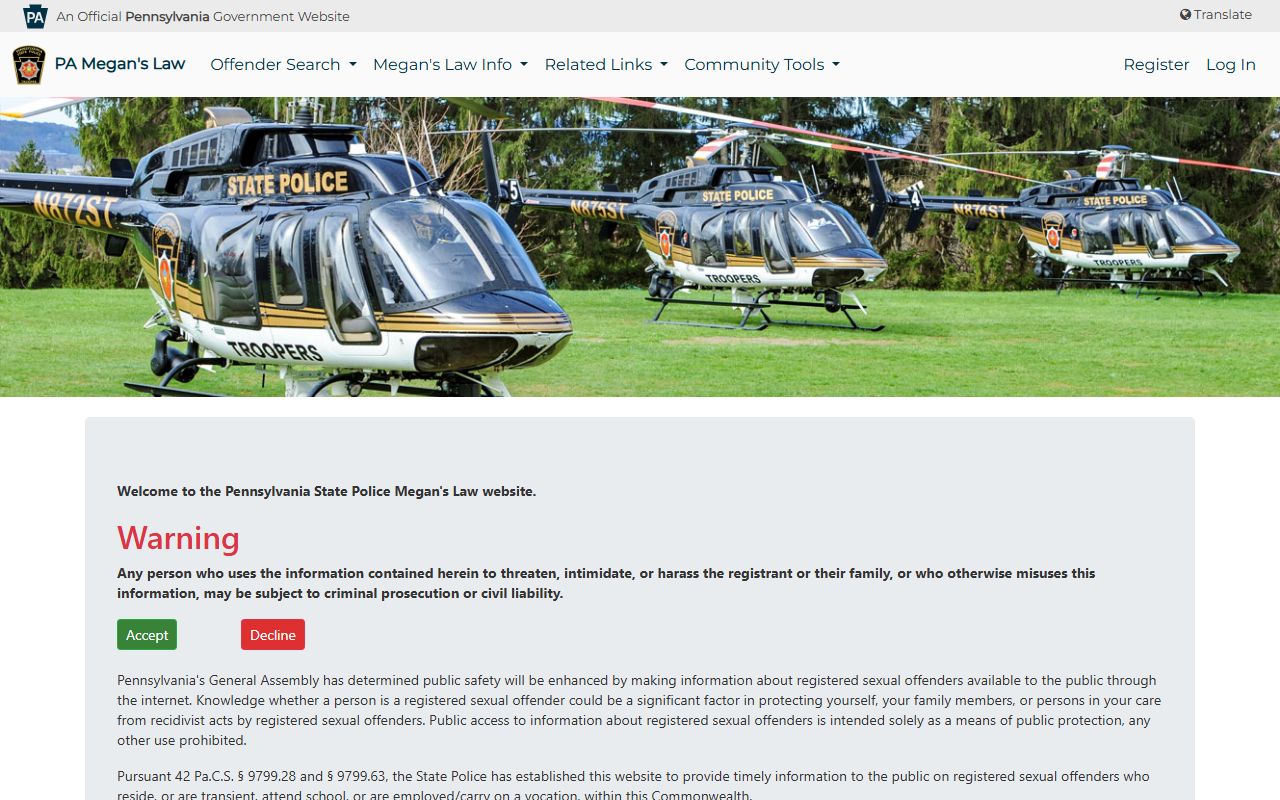
That Megan's Law registry is a public-facing tool, but it cannot confirm identity on its own. The State Police note that only a fingerprint comparison positively identifies a registered person.
Driver Records Are Separate
Driver records are a public-records question people often ask about, and the answer surprises them. A driver record is not a court record. It is held by PennDOT, not the courts, and it follows its own access rules.
PennDOT keeps a driving history for every licensed driver, built from offenses and convictions reported by police and courts. You can request a three-year, ten-year, or full history online or by form, but certified histories come only by the DL-503 form. The online portal requires a certification that you are pulling your own record or have written authorization, and a false statement is punishable under 18 Pa.C.S. Section 4904(b). For the full split between a court traffic docket and a state driver record, see Allegheny County traffic court records.
Genealogical and Historical Records
Family historians lean on public records too. Many of the same files that serve a legal search also serve a genealogical one. The county and state hold civil suits, criminal cases, estate and will files, marriage records, and the docket indices that tie them together. Older civil and family material has its own access route.
For estate and will research, the Wills/Orphans' Court Division keeps probate files and offers a Will Search Request Form. For pre-1995 civil and family cases, DCR provides an Indices Prior to 1995 search for index research that predates the modern system. Marriage records run through the same Wills/Orphans channel. Federal cases tied to the region are held by the federal court system, which is separate from county records.
- Civil and criminal case files through DCR and the UJS docket search.
- Estate, will, and guardianship files through the Wills/Orphans' Court Division.
- Marriage records through DCR's marriage section.
- Pre-1995 civil and family index research through the Indices Prior to 1995 search.
Birth and death certificates are state vital records, kept by Pennsylvania's vital records office rather than the county courts.
Public Records Fees in Allegheny County
Copies cost money, and the charge depends on the office and the copy type. A plain copy and a certified copy carry separate fees, and each DCR division posts its own schedule. The county also charges a records retention fee per filing, which is set to rise on June 1, 2026. The table below shows common fee items for court-record copies.
| Item | Amount |
|---|---|
| Summary appeal filing fee | $94, money order or cash |
| Certified copy of a marriage record | $20 |
| Records retention fee per filing (current) | $3.50 |
| Records retention fee per filing (from June 1, 2026) | $7.00 |
Each division posts a full cost list. The Civil/Family Division publishes a civil and family fee schedule, the Criminal Division posts its own cost and fee schedule, and the Wills/Orphans' Court Division lists probate and Orphans' Court fees. For office structure, hours, and copy-request steps, see the Department of Court Records page. People who cannot pay a summary appeal fee may file an In Forma Pauperis petition to request a waiver.
Confirm any fee on the live county page before you pay. Court fee schedules change, and the June 2026 retention-fee increase is one example.
Response Timelines and Denials
A Right-to-Know request gets a written answer within the statutory window. The agency can grant the request, deny it, or invoke a limited extension when more time is needed to gather or review records. The response must explain the reason for any denial.
If an agency denies a Right-to-Know request, the law gives an appeal route through the state Office of Open Records, with a further path to court. Court case files work differently. If DCR will not release part of a file because it is sealed or confidential, the route is to petition the court that controls the record rather than to file an open-records appeal. For criminal matters that may need expungement or limited access, the request runs through the Clerk of Courts after the State Police process. To search dockets first, use Allegheny County criminal records.